Home · The Village of the Hanged
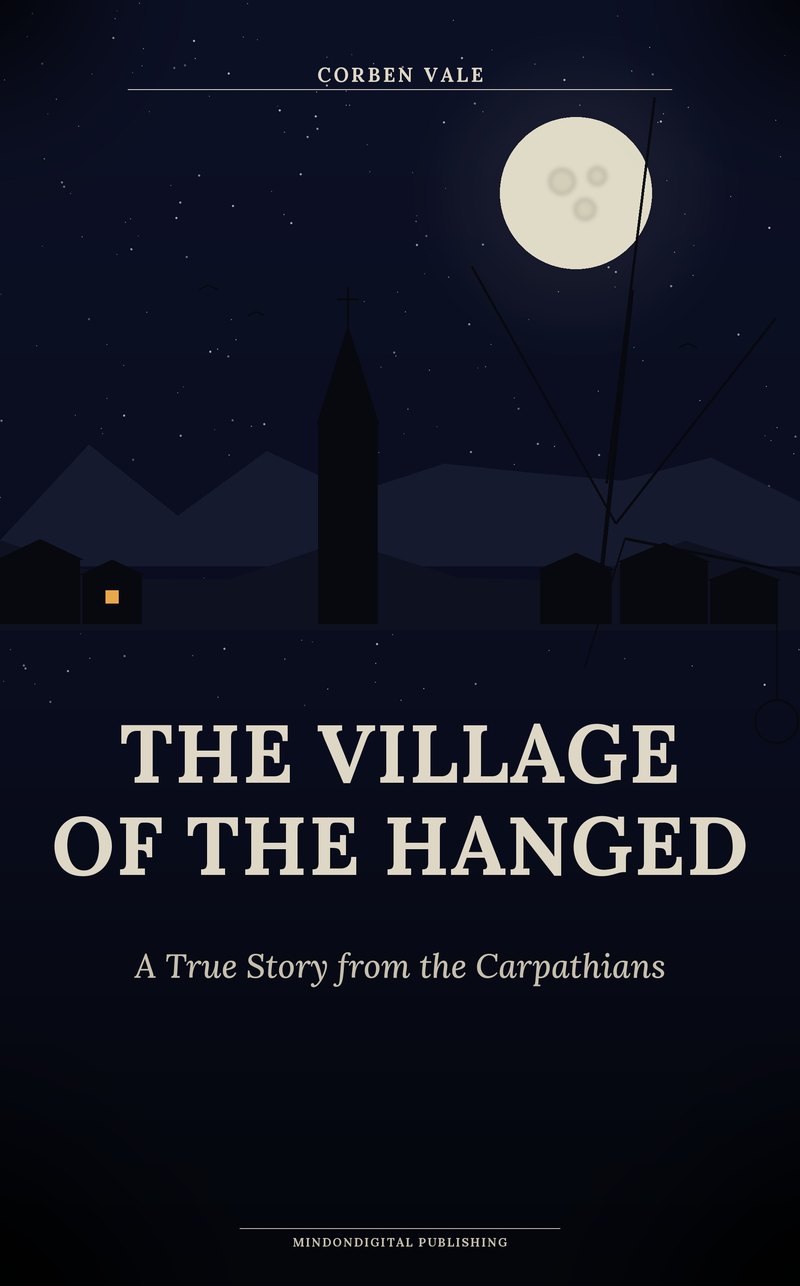
The Village of the Hanged
A True Story from the Carpathians
A village at the foot of the Carpathians that the surrounding countryside knows by one name only. The opening of the Carpathian Chronicles – based on true events.
The book as a beautifully typeset collector’s PDF and as an EPUB, plus extras you won’t find in any store: the Dossier with family tree and chronicle, the booklet “The Customs Behind the Book” and five phone wallpapers. All DRM-free, with the extras also available as EPUB for Kindle, Kobo and other e-readers.
Subject to our Terms & Conditions · Right of withdrawal · Final price – small business under Sec. 19 German VAT Act, no VAT charged
Payment via Stripe, instant download once your payment is complete.
Both Collector’s Editions + “The Chronicle”
More than two ebooks: you get both books as Collector’s Editions with all the extras – plus “The Chronicle”, available only in this bundle.
- “The Village of the Hanged” and “Stafii” – each as EPUB and as a typeset collector’s PDF (A5)
- 2 Dossiers with family tree, places, rules and chronicle (PDF + EPUB)
- 2 booklets “The Customs Behind the Book”, explained and sourced (PDF + EPUB)
- “The Chronicle”: both books in one timeline – bundle only (PDF + EPUB)
- 10 phone wallpapers
- DRM-free, instant download after payment
Subject to our Terms & Conditions · Right of withdrawal · Final price – small business under Sec. 19 German VAT Act, no VAT charged
Bought separately, the two Collector’s Editions cost €17.80.
What it is about
What if your grandmother's warning were a matter of life and death? When the narrator falls in love with Lena, a Romanian woman, he has no idea what he's getting into: a village at the foot of the Carpathians that people in the surrounding area know by only one name — the village of the hanged. At first it's just small things: a cat that flees from his new girlfriend, noises in the apartment that nobody can explain, an invisible lodger the two of them soon call only “the Hairy One.” But the deeper he sinks into his new family's life, the clearer it becomes: a curse more than a hundred years old lies over this place. The Village of the Hanged is a true story about love, family, and an evil that doesn't vanish just because you refuse to believe in it. Book 1 of the Carpathian Chronicles.
It starts with small things, the way these stories always do: a cat that leaves a room the moment Lena enters it. Peanuts that suddenly have eyes. A basement apartment in Germany where something knocks with no hand behind it. Only later does the road lead to the village, and there the narrator is a guest – and guests ask the questions the locals stopped asking long ago, because they know the answers and live by them.
There are footsteps circling the bed at night and three knocks at a door with no one behind it. But what is truly uncanny comes before all that: a family with rules it never explains. A woman you love whose origins carry a price. And a place that has stopped counting its dead.
Based on true events
The book is a first-person account. The narrator lived through a large part of it himself; the rest was told to him by people he trusts – family members, neighbors, witnesses who were there. The village exists: an ordinary municipality at the foot of the Carpathians that the people around it still call only the village of the hanged.
Names and routes have been altered in the book, out of consideration for the people who still live there. Everything else – the customs, the rules, the order in which things happen – stands as it was told. Anyone who wants to test how solid that ground is will find the traditions set out one by one, with sources, in Legends & Customs.
The folk belief behind the story
The Carpathian Chronicles do not invent their superstition. They draw on a tradition still lived in Romania today – openly in some villages, half-hidden in others. Three of the customs that matter in the book are explained in full here:
Knocking at Night
Three knocks shortly after midnight, and no one is outside. In the Carpathians you do not open the door. Where this superstition comes from.
Why Seven Years? Graves in the Carpathians
In parts of Romania the dead are dug up again after seven years, the bones washed and buried a second time. Where this custom comes from.
Priveghi
The dead are never left alone: the wake, the wailing songs, a coin placed in the hand — the Romanian priveghi tradition, and what it's really guarding against.
Sample chapter
The opening pages are available as a PDF – no sign-up, no email address. If you would rather stay in the world a little longer first, the Carpathian glossary collects the terms the book uses.
Book 1 and Book 2
The Carpathian Chronicles are written as a series. The Village of the Hanged opens it; Stafii – Uncanny Voices in the Night picks up a year after the first book came out and goes deeper into the dark the first book only touched. Both are published on the same day. Book 2 can be read alone, but you lose the rules Book 1 establishes – and Book 2 relies on them.
Editions and languages
The book is out as an ebook in seven languages: German, English, Romanian, French, Spanish, Italian and Portuguese. Each edition is translated in its own right, not passed through a machine. The book is available at all major retailers. The price shown applies to the eurozone; retailers in other countries charge their own local prices.
Frequently Asked Questions
Is the story actually true?
It rests on a real place, real deaths and a tradition that exists. Names and routes have been changed so the people there keep their peace. What the book describes as custom can be looked up – including on this site.
Do I need to read Book 1 before Book 2?
Recommended, not required. Book 1 introduces the family, the village and the rules Book 2 refers back to. Start with Book 2 and you will follow the plot, but not why nobody answers.
When was it published?
15 October 2026. Both volumes have been available in every major store since then.
Which languages is it available in?
Seven: German, English, Romanian, French, Spanish, Italian and Portuguese.
How frightening is it?
It works through atmosphere rather than gore. No explicit violence, but a steady unease – the kind of story that has you leaving the hallway light on.
Read on
Strigoi and Moroi – the Carpathian undead
Strigoi, moroi, stafii: the Romanian folklore of the returning dead — the root of the vampire myth. What the terms mean and why the evil does not disappear.
Covered Mirrors
When someone dies in the Carpathians, every mirror is veiled – so the soul cannot be trapped in the glass. Where this custom comes from.
The Witching Hour
The ceasul rău – the bad hour. Whoever wakes around three for no reason does not rise, in the Carpathians. Where this belief comes from.
Both books of the Carpathian Chronicles are out in seven languages and available in every major store.